A Woman Is Not Here to Be Desired. She Is Here to Be Fully Alive.
9 August 2026 · 14 min read

From the sensual aliveness of ancient African women to the Devi traditions of India, a study of what happens when a woman stops performing womanhood and begins remembering herself.
When I study ancient African tribal women, I find something very precious. They are so sensual, so alive, and they carry such potent sexual energy. They also know how to celebrate themselves—their bodies, their womanhood, their sensuality, their fertility, their dance, and their connection with nature.
They do not completely depend on men for their sense of worth. Men are drawn toward them; men want to mate with them. There is something alive and powerful in the way these women inhabit themselves.
They become the desire of men. Why are they desired? Why does a man want to give himself completely, protect them, provide for them, and honor them? I am studying this question more deeply because I believe the answer is not simply physical beauty. There is something about aliveness, self-possession, sensuality, and embodied feminine energy.
Their sensuality is not only about sex. It can be expressed through movement, dance, rhythm, celebration, motherhood, community, nature, creativity, and the way they inhabit their bodies. Their sexuality is one part of a much larger experience of being alive.
Woman as Devi in Indian traditions
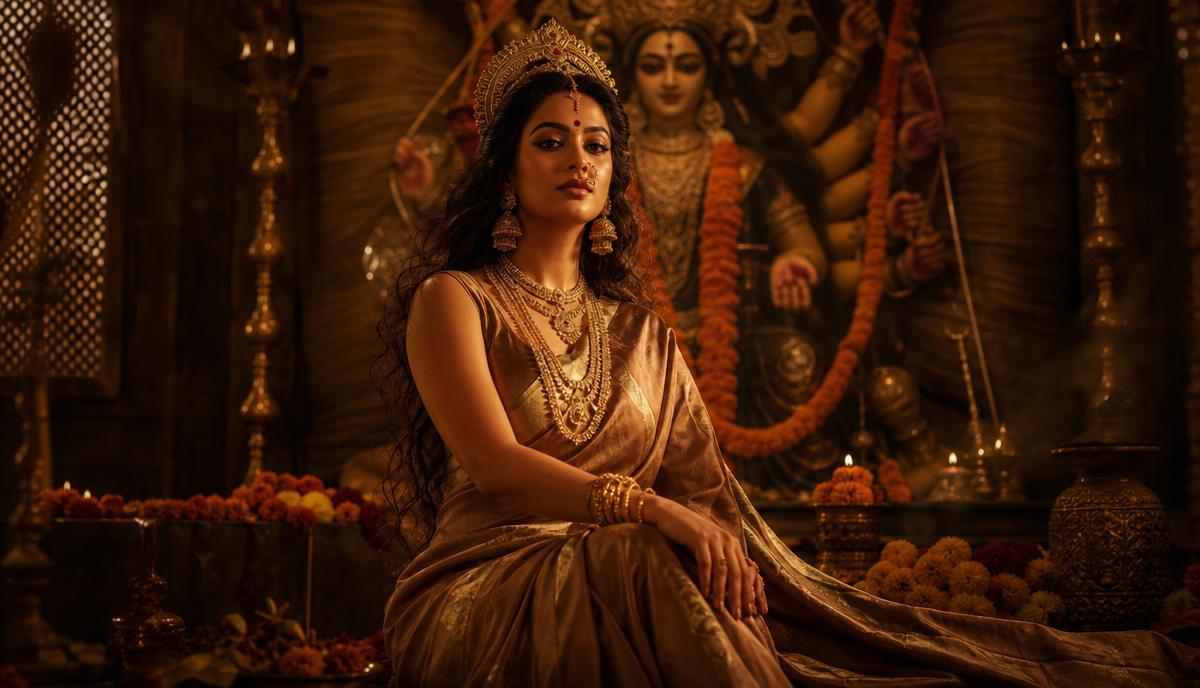
But when I come to ancient Indian cultures, I see another element. Here, the woman becomes a goddess—one step further in the spiritual imagination—because our scriptures and traditions add another dimension to womanhood: Devi.
In Indian traditions, we honor the woman as Devi. Feminine power is represented through Shakti in different forms. She is not only sensual; she can represent creation, wisdom, abundance, protection, destruction, transformation, and spiritual power.
This makes the feminine body and feminine energy deeply symbolic. The woman is not simply someone for a man to possess. In these traditions, feminine power can be understood as an essential force of life itself.
When the wounding began
But slowly, things changed. Men became more fragile, disconnected, wounded, and purposeless. When a man becomes disconnected from himself, he can also become disconnected from the deeper meaning of womanhood.
Instead of meeting a woman with presence, respect, responsibility, and devotion, some men began using women simply to release themselves. The woman became an object for their frustration, sexual release, anger, control, and unresolved wounds.
Women were controlled, silenced, shamed, exploited, and abused. Their desires were suppressed. Their voices were ignored. Their bodies became places where the wounds and power struggles of others could be expressed.
And women also became wounded. When pain continues across families and generations, some women may begin accepting patterns that should never have been normalized. What is repeated for long enough can start feeling familiar, even when it is harmful.
She can slowly become disconnected from her own desires. She may know what her family wants, what her husband wants, what society expects, and what everyone needs from her—but she may no longer know what she wants.
This is where sensuality can disappear. Sensuality needs more than sexuality. It needs presence. It needs a woman to feel connected with her body, her senses, her desires, her boundaries, her creativity, and her own aliveness.
Western liberation and its shadows
Western cultures developed through a different historical path. Women’s sexuality, independence, religion, marriage, family structures, and gender roles evolved differently across different Western societies.
But somewhere along the way, partying, drinking wine, one-night stands, casual relationships, and constantly changing partners began to be presented by parts of popular culture as symbols of liberation.
But is that really liberation?

If liberation only means, 'I can do whatever I want with my body,' without asking, 'What does my body actually want? What nourishes me? What leaves me feeling whole?' then freedom can become another form of disconnection.
A woman can have complete sexual freedom and still be deeply wounded. She can have multiple partners, experience multiple divorces, attend parties, drink, date freely, and still feel lonely, unseen, disconnected, or emotionally exhausted. The behavior itself does not prove either liberation or woundedness; what matters is what is driving it.
Slowly, the language of women’s liberation can also be hijacked by industries that profit from insecurity, attention, sexuality, beauty standards, dating, and consumption. They can sell a woman the idea that buying more, exposing more, attracting more attention, or constantly seeking new experiences automatically means she is empowered.
But empowerment cannot simply be something a business sells to her.
And liberation cannot mean copying the most disconnected parts of male culture. If freedom only teaches a woman to behave according to another culture’s expectations of sex, success, desirability, and consumption, she may have escaped one cage only to enter another.
What real liberation looks like
Real liberation, in my study, goes deeper. It is when a woman can consciously choose—yes or no, relationship or solitude, sexuality or celibacy, marriage or independence—without shame, pressure, trauma, manipulation, or the need for external validation.
Her freedom is not measured by how many men desire her, how many partners she has had, how much she drinks, or how sexually available or unavailable she is.
Her freedom begins when she belongs to herself.
So my study is not simply about African, Indian, or Western women being better than one another. Each contains different histories, traditions, wounds, strengths, and contradictions. I am interested in understanding what happened to the woman who once felt deeply connected to her body, her sensuality, her community, nature, spirituality, and her own power.
The woman who remembers
Maybe the deeper question is: What happens when a woman remembers herself? When she no longer experiences her body only through the expectations of men, family, religion, culture, or society, she begins discovering what genuinely belongs to her.
She begins exploring her desire—not desire created by social media, movies, pornography, advertising, or someone else’s fantasy, but desire arising from her own body, values, imagination, and inner world.
And perhaps this is where the ancient image of the goddess becomes meaningful again. Not because every woman has to behave in one particular way, but because the goddess can symbolize a woman who recognizes that her body, sensuality, intelligence, creativity, boundaries, pleasure, anger, tenderness, and spiritual life all belong to her.
My research keeps bringing me back to the same place: a woman is not here simply to be desired. She is here to be fully alive.